2026 production bottleneck solutions: fix your flow & boost output
Table of Contents ▼
- Pinpoint your production bottlenecks
- What is a production bottleneck?
- Common signs of a slowdown
- Using Baldrige for initial assessment
- Your first steps: data & observation
- Data-driven strategies to fix your flow
- Leveraging analytics for precision
- Implementing effective solutions
- Leadership's role in driving change
- Future-proofing: continuous improvement
- Building a culture of resilience
- The power of AI & digital twins
- Choosing the right path forward
- Achieving measurable results
- Key Sources & Trust
- Frequently Asked Questions
- Ready to Optimize Your Operations?
Picture this: you're walking through your factory, and there it is again. That familiar cluster of half-finished products, that single machine groaning under the weight of backlogged work, or that one team constantly chasing its tail. Sound familiar? In 2026, these aren't just minor headaches; they're the invisible chains holding back your entire operation, silently eroding profits and morale.
Most operations managers know they have bottlenecks, but identifying the real culprits and, more importantly, eliminating them effectively, feels like playing whack-a-mole. This guide isn't about guessing; it’s about giving you the battle plan, the tools, and the actionable insights to not just find those bottlenecks, but to dismantle them and supercharge your production flow. Let’s turn those bottlenecks into breakthroughs.
Pinpoint your production bottlenecks
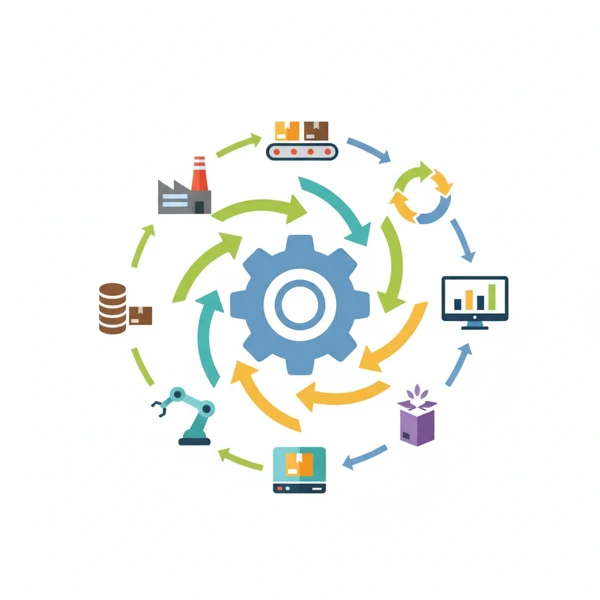
Finding the constraint is half the battle. Before you can fix your flow, you need to know exactly where the dam is. This isn't just about identifying a slow spot; it's about understanding the critical constraint that dictates your entire organizational pace.
What is a production bottleneck?
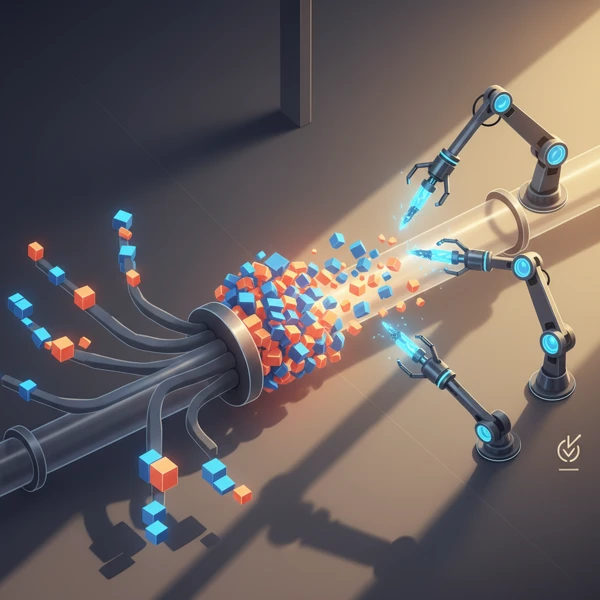
At its core, a production bottleneck is the slowest operation in a sequence of operations, limiting the overall output. Think of it like the narrowest point in a pipeline – no matter how much water you pour in at the beginning, only a certain amount can get through at the end. This concept, central to the Theory of Constraints (TOC)[1], explains why bottlenecks aren't just minor nuisances; they're the pacing factor for your entire system.
It's a critical distinction: a temporary slowdown is like a traffic jam that clears up, but a bottleneck is like a permanent single-lane bridge on a multi-lane highway. As Michael Koralewski, Chief Supply Chain Officer at First Solar, eloquently puts it:
"Every organization has countless opportunities for improvement, but only a few points—what we call constraints or bottlenecks—govern the pace and performance."
— Michael Koralewski, Chief Supply Chain Officer, First Solar[2]
This isn't just about output; it’s about efficiency, resource utilization, and ultimately, your profitability. Identifying these systemic constraints is the first, most crucial step in any successful production flow optimization.
Common signs of a slowdown
Before you dive into complex data, there are often clear, visible indicators screaming for your attention right on the shop floor. These are the tell-tale signs that a bottleneck is lurking:
- Excessive work-in-progress (WIP): Piles of unfinished goods or components accumulating before a specific machine or workstation.
- Long lead times: Consistent delays in product delivery or completion dates, not because of raw materials, but internal processing.
- Uneven workflow: Some departments are idle while others are constantly overwhelmed and stressed, leading to morale dips.
- Frequent delays: Production schedules constantly slipping, even with "overtime" efforts.
- High stress levels: Specific teams or individuals regularly working under intense pressure to meet impossible targets.
- Reduced throughput: Despite best efforts, the overall number of finished units per hour/day just isn't hitting targets.
These observable symptoms are often the first flags for operations managers, signaling where to direct a deeper, data-driven investigation. Ignoring them is like ignoring a check engine light – eventually, your whole system might grind to a halt.
Using Baldrige for initial assessment
So, where do you start? When facing a sea of operational issues, a structured framework can be a lifesaver. The Baldrige Excellence Framework[3], while comprehensive, offers an incredible guiding structure for understanding organizational performance. It's not just for big corporations; its principles are universal.
By assessing your processes against Baldrige's criteria for efficiency, effectiveness, and adaptability, you can often pinpoint areas ripe for bottlenecks, even before granular data analysis. It provides a holistic view to understand the context in which these constraints exist, making your subsequent targeted solutions far more impactful.
Your first steps: data & observation
Moving from a "feeling" that you have a bottleneck to "seeing" it with undeniable clarity requires two things: data and direct observation. You can't fix what you don't truly understand.
- Workflow analysis: Map out every step of your production process, from raw materials to finished product. Document the inputs, outputs, and dependencies for each stage.
- Basic data collection: Start with easy-to-measure metrics:
- Cycle times: How long does each step take?
- Throughput rates: How many units does each step produce per hour/day?
- Queue times: How long do products wait between stages?
- Gemba walk: Get on the shop floor! Observe processes in real-time, talk to operators, and witness the workflow firsthand. You'd be surprised what patterns emerge when you step away from your desk.
This initial data will shine a spotlight on the true constraint, allowing you to focus your efforts. As the Theory of Constraints[4] emphasizes, every system has one, and only one, core constraint at any given time. Find it, and you find the key to unlocking your production capacity.
Data-driven strategies to fix your flow

Enough talk, let’s get to work. Identifying bottlenecks is just the warm-up. The real game changer is applying data-driven strategies to eliminate them. This is where you move from frustration to measurable results, leveraging modern tools to achieve what actually works.
Leveraging analytics for precision

Gone are the days of gut feelings. In 2026, precision in bottleneck resolution comes from deep analytics. You need to move beyond basic cycle times to a holistic view of your operational data. This means:
- Capacity analysis: Understand the maximum output of each workstation and compare it against actual throughput. This highlights where your capacity is truly limited.
- Value stream mapping (VSM): Visually map the flow of materials and information, identifying all value-adding and non-value-adding steps, especially focusing on where delays occur.
- Bottleneck analysis software 2026: Tools like advanced manufacturing execution systems (MES)[5] with integrated analytics offer real-time production monitoring and detailed insights. They can identify subtle bottlenecks that human observation might miss.
The trend toward data-driven innovation is undeniable. Just look at the government's investment: NIST is allocating over $3 Million to small businesses advancing AI, Biotechnology, Semiconductors, Quantum and More[6]. This isn't just theory; it's a clear signal that advanced analytics and AI are becoming non-negotiable for competitive manufacturing.
Implementing effective solutions
Once you've precisely located your bottlenecks, it’s time for action. Here are practical strategies that actually work:
- Process re-engineering: Sometimes the process itself is the problem. Simplify steps, remove redundancies, and challenge assumptions. Ask, "Is this step truly necessary?"
- Resource reallocation: Can you shift personnel or equipment from less constrained areas to support the bottleneck? This might mean cross-training staff or investing in additional, similar machinery.
- Capacity leveling: Optimize your production schedule to smooth out demand peaks and valleys at the bottleneck workstation. This might involve building a small buffer inventory before the bottleneck.
- Technology adoption: This is the shortcut most people miss. Custom automation solutions offer lasting relief. For example, replacing a manual inspection process with AI-powered vision systems, or automating a complex assembly step. This not only eliminates the current bottleneck but can prevent future ones. For more on this, check out our guide on integrated automation for European manufacturing.
Implementing these solutions requires a holistic view. Often, improving one area might reveal a new bottleneck elsewhere. That's why continuous monitoring and an agile approach are critical. Don't fall into the trap of a one-and-done fix.
Leadership's role in driving change
You can have the best data, the most sophisticated software, and a perfect plan, but without strong leadership, any bottleneck resolution effort is dead in the water. Change is hard, and people often resist it – especially when it impacts their daily routines.
Jo Ann Jenkins, CEO of AARP Inc., nails it:
"The leadership and senior management must model its organization's mission consistently... particularly during times of change."
— Jo Ann Jenkins, CEO, AARP Inc.[7]
This means leadership needs to:
- Communicate the 'why': Explain clearly why changes are necessary and the benefits for the company and individuals.
- Provide resources: Ensure teams have the tools, training, and support needed to adapt to new processes or technologies.
- Lead by example: Be present on the shop floor, show enthusiasm for the changes, and acknowledge the challenges.
- Celebrate small wins: Recognize progress and effort to build momentum and maintain morale.
Without this commitment, "common mistakes to avoid" include resistance from the workforce, a lack of sustained effort, and ultimately, a return to the old, inefficient ways. Leadership isn't just about strategy; it's about culture.
Future-proofing: continuous improvement

The fight against bottlenecks is never truly over. You've identified, analyzed, and eliminated your major constraints. Pat yourself on the back! But here’s the kicker: eliminating one bottleneck often just reveals the next one in line. True production flow optimization is a journey, not a destination.
Building a culture of resilience

To achieve sustained manufacturing efficiency improvements, you need to foster a culture of continuous improvement – Kaizen. This means:
- Empowering employees: Give your frontline workers the tools and authority to identify and suggest improvements. They’re closest to the problem, after all.
- Regular audits: Schedule periodic reviews of your processes and data to catch new constraints as they emerge.
- Learning from failures: Not every solution will be perfect. Embrace failures as learning opportunities to refine your approach.
- Cross-functional collaboration: Encourage different departments to work together on problem-solving, breaking down silos that can hide bottlenecks.
A resilient organization isn't one that never encounters problems; it's one that consistently identifies and adapts to them. It's about proactive management, not reactive firefighting.
The power of AI & digital twins
This is where the future of proactive bottleneck management truly shines. In 2026, advanced technologies are no longer theoretical – they are practical tools for future-proofing your operations.
- AI-driven predictive analytics: AI can analyze massive amounts of real-time data from your machines and sensors to predict when and where a bottleneck is likely to occur, often days or weeks in advance. This allows you to reroute, reallocate, or perform maintenance proactively, avoiding costly downtime.
- Digital twins: Imagine a living, breathing virtual replica of your entire factory floor. Digital twins allow you to simulate process changes, test new layouts, or run "what-if" scenarios to identify potential future bottlenecks before they impact physical production. It's risk-free experimentation at its finest.
The government is actively supporting these innovations. NIST, through its Office of Advanced Manufacturing, provides cost-shared funding[8] to advance technology R&D and increase energy efficiency across the manufacturing sector, including AI and advanced manufacturing. This kind of investment validates the strategic importance of adopting these forward-thinking solutions.
NIST Small Business Innovation Research (SBIR) Program Focus
NIST is strategically allocating resources to drive innovation in critical technology areas. The chart below illustrates the breadth of their focus for small business support.
Note: Focus levels are illustrative based on reported NIST priorities and investment areas in advanced technologies. Source: NIST, 2026
Choosing the right path forward
With so many options, how do you decide the best way to optimize your production flow? Here’s a quick comparison to help clarify:
| Feature | Generic Bottleneck Software | Custom Automation Solutions |
|---|---|---|
| Identification Accuracy | Rule-based, historical data | AI-driven, real-time predictive analytics |
| Solution Implementation | Manual process adjustments, limited tool integration | Automated process re-engineering, robotic process automation (RPA), deep system integration |
| Adaptability | Reactive, requires manual re-configuration | Proactive, self-optimizing via AI, digital twin simulation |
| Long-term Relief | Temporary fixes, new bottlenecks emerge | Lasting elimination, future-proofing operational resilience |
| ROI Potential | Moderate efficiency gains | Significant throughput increase, substantial cost reduction, quality improvement |
While generic software can offer some insights, custom automation solutions truly stand apart. They offer tailored precision, deeper integration, and a long-term strategy for production flow optimization. It's not just about fixing a problem; it's about building a fundamentally better, more efficient operation.
I put together a Manufacturing Efficiency Checklist PDF that covers the key questions to ask before implementing any major solution — grab it here.
Bottleneck Impact Simulator
Step 1: Your Current Operational Snapshot
Let's get a baseline. Enter your current production metrics.
Step 2: Simulate an Improvement
How much can you realistically improve the bottleneck's capacity?
Step 3: Your Potential Throughput Gain!
New System Throughput: Units/hour
That's a potential increase of:
The bottleneck still exists at units/hour, but your overall flow is significantly better!
Achieving measurable results
What kind of results can you expect when you proactively manage and eliminate production bottlenecks? The impact is significant and quantifiable:
- Increased throughput: Your primary goal. More units produced in the same amount of time.
- Reduced waste: Less work-in-progress, fewer errors due to rushed processes, and optimized resource use.
- Improved quality: Less pressure on bottlenecked stages often leads to higher quality output.
- Shorter lead times: Products move through production faster, reducing delivery times for customers.
- Higher customer satisfaction: Faster delivery, better quality, and more reliable service.
- Enhanced operational agility: A smoother process allows for quicker adaptation to market changes and new demands.
Ultimately, consistent manufacturing efficiency improvements and production flow optimization are about achieving peak operational performance. It's about building a robust, responsive, and profitable manufacturing operation ready for whatever 2026 and beyond throws at it.
Key Sources & Trust
| # | Source | Trust Score | Key Insight | Link |
|---|---|---|---|---|
| 1 | Lean Production | 50/100 | Theory of Constraints (TOC) overview | leanproduction.com |
| 2 | NIST Baldrige Performance Excellence Program | 85/100 | Expert quote on constraints governing performance | nist.gov |
| 3 | NIST Baldrige Program | 85/100 | Baldrige Framework for organizational assessment | nist.gov |
| 4 | The Lean Six Sigma Company UK | 50/100 | Theory of Constraints (Bottleneck) explanation | theleansixsigmacompany.com/uk |
| 5 | ScienceDirect | 83/100 | Impact of Industry 4.0 on bottleneck analysis | sciencedirect.com |
| 6 | NIST Associate Director for Innovation & Industry Services | 85/100 | NIST funding allocation for AI & advanced manufacturing | nist.gov |
| 7 | NIST Performance Excellence | 85/100 | Expert quote on leadership modeling behavior | nist.gov |
| 8 | NIST Funding Opportunities (Office of Advanced Manufacturing) | 80/100 | NIST support for manufacturing competitiveness | nist.gov |
Frequently Asked Questions
A production bottleneck is any point in a manufacturing process where the flow of work is restricted, limiting the overall output of the entire system. Think of it as the narrowest part of a funnel – everything can only flow as fast as that constriction allows. It's the critical constraint dictating your organizational pace, not just a temporary slowdown.
Look for visible queues of work-in-progress (WIP) piling up before a specific workstation, consistently long lead times for products, uneven workflow distribution, or specific departments always under immense pressure. Basic data collection like cycle times and throughput rates for each stage will quickly highlight where the slowdowns are truly occurring.
AI-driven predictive analytics can analyze vast datasets to foresee potential bottlenecks before they even happen, allowing for proactive adjustments. Digital twins create virtual replicas of your production lines, enabling you to simulate changes, test solutions, and optimize processes without disrupting actual production. They're like a crystal ball for your factory floor.
Absolutely! While comprehensive, the Baldrige Excellence Framework provides a structured approach to understanding your entire organizational performance. By focusing on its Process Management and Operations categories, even smaller manufacturers can gain a holistic view to pinpoint where systemic bottlenecks might reside, guiding their initial assessment and improvement efforts.
The biggest pitfall is tackling symptoms instead of root causes. Another common mistake is failing to involve the team directly affected by the bottleneck – their insights are invaluable. Lastly, ignoring leadership's role in modeling commitment to change can derail even the best-planned initiatives. Remember, a one-time fix won't last; continuous improvement is key.
You can expect significant improvements across the board: increased throughput, reduced work-in-progress, shorter lead times, lower operational costs, and higher product quality. Ultimately, it leads to greater customer satisfaction and a much more agile, resilient manufacturing operation that can adapt to market demands.
Ready to Optimize Your Operations?
Tired of bottlenecks dictating your pace? It's time to stop guessing and start implementing solutions that actually work. Let's build a smarter, faster, and more efficient production flow together.
Let's Get Your Flow Fixed!Related Posts
Operator-centric automation: boost efficiency & innovate production in 2026
Boost manufacturing automation efficiency in 2026 with operator-centric automation. Drive peak performance & breakthrough innovation.
Fixed-price automation projects: predictable roi for european manufacturing 2026
European manufacturers: unlock predictable ROI with fixed-price automation projects in 2026. Learn how to manage costs and drive innovation.
Edge AI and custom automation: how to explore the future of European manufacturing in 2026
Discover how European manufacturers can leverage Edge AI and custom automation in 2026 to innovate, optimize production, and achieve breakthroughs.